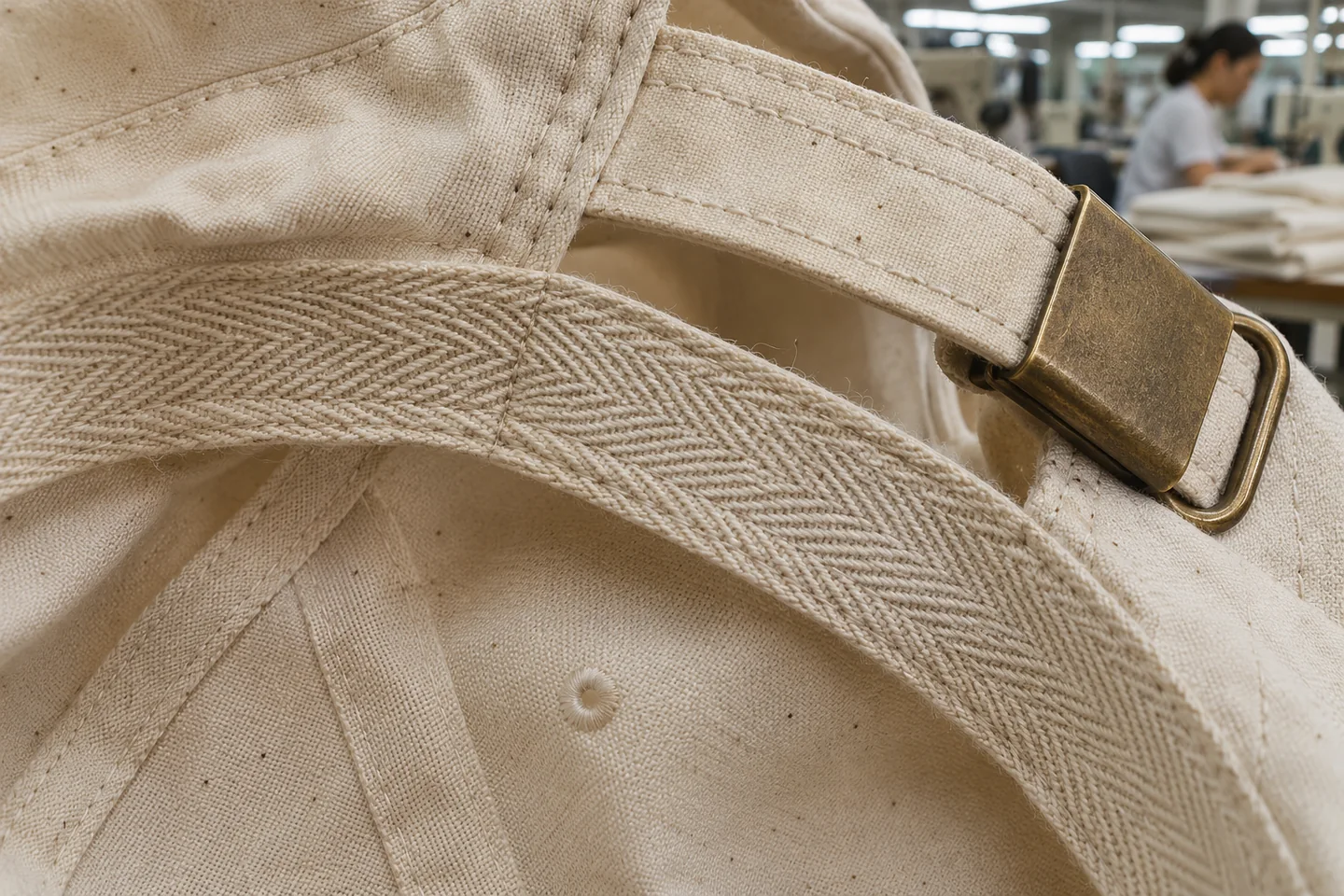
Technical Review by Ningbo SolaceCraft Heavyweight Jersey & Garment Co., Ltd. OEM Engineering & QC Desk (Yinzhou Combed Knitwear Base, Ningbo, Zhejiang, China · 17,350 m² · BSCI · WRAP · OEKO-TEX Standard 100 · GOTS) · ⏱ 5 min technical read
For tailored OEM specifications and direct mill quotations, explore Custom Heavyweight Cotton T-Shirts Bulk Order.
1. Fabric Weight, Yarn, and Hand Feel
True heavyweight cotton sits at 220-260 GSM, equivalent to 6.5-7.7 oz/yd². Below 200 GSM, the garment loses structure and reads as a standard tee. Specify 100% combed ring-spun cotton, 16s/1 to 20s/1 yarn, with a compact-spun face for a smooth print surface. Check for evenness, slubs, and barre marks under D65 lighting. SolaceCraft supplies this weight range as its core heavyweight base, with pre-shrunk fabric to control later dimensional change.2. Knit Density, Pilling, and Durability
Weight alone does not guarantee durability. Require a tight, uniform knit with no dropped stitches, holes, or thin spots. Pilling resistance should reach Grade 4 after 2,000 cycles on the Martindale test, and bursting strength should exceed 350 kPa for the body fabric. Inspect the inside of the garment for loose yarn ends and confirm the ribbed collar recovers fully after stretching to 150% of its resting width.3. Dimensional Stability and Size Tolerances
Heavy cotton moves after washing if it is not properly finished. Acceptable shrinkage after three home launderings at 40°C is ±3% in length and ±3% in width. Apply strict measurement tolerances at final inspection: chest width ±10 mm, body length ±10 mm, shoulder width ±6 mm, and sleeve length ±8 mm. Measure each size on a flat table, without stretching, and compare against the approved size chart and sealed sample.4. Colour Accuracy and Colourfastness
Colour is one of the most common reasons for bulk rejection. Match production dye lots to the approved Pantone TCX or PMS reference within ΔE ≤ 1.5 under D65 light, and check for shade variation between panels, sleeves, and collar ribbing. Minimum colourfastness requirements are Grade 4-5 for washing, Grade 4 for dry rubbing, Grade 3-4 for wet rubbing, Grade 4 for perspiration, and Grade 4 for light exposure. Dark colours and garment-dyed styles need extra checks for staining on white trims and inner labels.5. Print and Embroidery Quality
For screen print, plastisol, water-based, and discharge prints, confirm placement within ±5 mm of the approved position and a clean edge with no cracking after a stretch test. Print wash durability should hold for at least 30 wash cycles without significant fading or peeling. For embroidery, require a density of 0.4-0.5 mm stitch spacing, no puckering, and a stabilised backing that does not show through the fabric. Always approve a pre-production print strike-off before bulk printing begins.6. Seams, Collars, and Finishing Details
Construction quality shows in the seams. Require 12-14 stitches per inch on side seams and shoulder seams, and 14-16 stitches per inch on hems and cuffs, with no skipped stitches, broken threads, or seam puckering. Shoulder seams should be taped, the neck ribbing should be 1x1 rib with a clean coverstitch, and the back neck should carry a twill tape for stability. Check that labels are sewn straight, care instructions are legible, and all loose threads are trimmed.7. Compliance, AQL Inspection, and Final Audit
Final inspection should follow AQL 2.5 for major defects and AQL 4.0 for minor defects, with zero tolerance for critical defects such as holes, stains, wrong labels, or safety hazards. Inspectors should pull samples to ANSI/ASQ Z1.4 Level II, check measurements, colour, print, and workmanship, and test a subset for shrinkage and colourfastness. SolaceCraft manufactures under BSCI, WRAP, OEKO-TEX Standard 100, and GOTS controls, which supports traceability for cotton origin, chemical compliance, and factory social audits. Checkpoint Specification Tolerance / Method Fabric weight 220-260 GSM 6.5-7.7 oz/yd², lab test Shrinkage After 3 washes at 40°C ±3% length and width Chest width Per approved size chart ±10 mm, flat measurement Colourfastness to washing Grade 4-5 ISO 105-C06 Final inspection AQL 2.5 major / 4.0 minor Level II sampling How to Order With Confidence Use the seven standards above as your purchase-order appendix and your pre-shipment checklist. Confirm the fabric GSM, size tolerances, Pantone TCX reference, print method, and AQL level in writing, and request a sealed production sample before bulk cutting. SolaceCraft offers a minimum order of 100 pcs per colour, with a 7-day sample and 18-22 days for bulk production. For a tailored factory quote based on your fabric, colour, print, and quantity, start a Custom Heavyweight Cotton T-Shirts Bulk Order inquiry and share your artwork and size breakdown for review. Confirm GSM, yarn count, and shrinkage limits on the order sheet. Approve colour, print strike-off, and size sample before bulk. Inspect to AQL 2.5 and record measurements for every size. Retain one sealed sample per colour for comparison at final audit. Applied consistently, the Top 7 Quality Standards & Inspection Checklists for Custom Heavyweight Cotton T-Shirts turn subjective quality into a repeatable buying process, reducing rework, returns, and delivery delays.Frequently Asked B2B Sourcing Questions
What is the factory MOQ and sampling lead time for Custom Heavyweight Cotton T-Shirts?
Our direct-mill minimum order starts at 100 pcs / color (7-Day Sample · 18-22 Days Bulk), with physical or high-resolution pre-production sample sign-off prior to bulk manufacturing.
How are pre-shipment quality control and global shipping handled?
Every export batch undergoes documented AQL 2.5 final inspection (BSCI · WRAP · OEKO-TEX Standard 100 · GOTS) with flexible EXW, FOB, CIF, or door-to-door DDP delivery upon direct factory inquiry.
Need Physical Samples or Direct Mill Specs for Custom Heavyweight Cotton T-Shirts?
Work directly with SolaceCraft engineering desk (MOQ 100 pcs / color). Submit logo/tech-pack for rapid pre-production sampling & tailored trade terms.